Most SOC 2 Type 2 audits do not fail in the auditor’s conference room. They fail months earlier, when a team treats evidence collection as something to sort out once the engagement letter is signed.
That approach does not work, because a Type 2 audit does not test whether your controls exist. It tests whether they operated effectively over an observation period of three to twelve months. There is no way to compress that timeline after the fact.
This checklist walks through what your team actually needs in place before you bring in an auditor, organised by the five phases that separate a clean first-time pass from a qualified report and a re-test.
Why Type 2 Readiness Is Different From Type 1
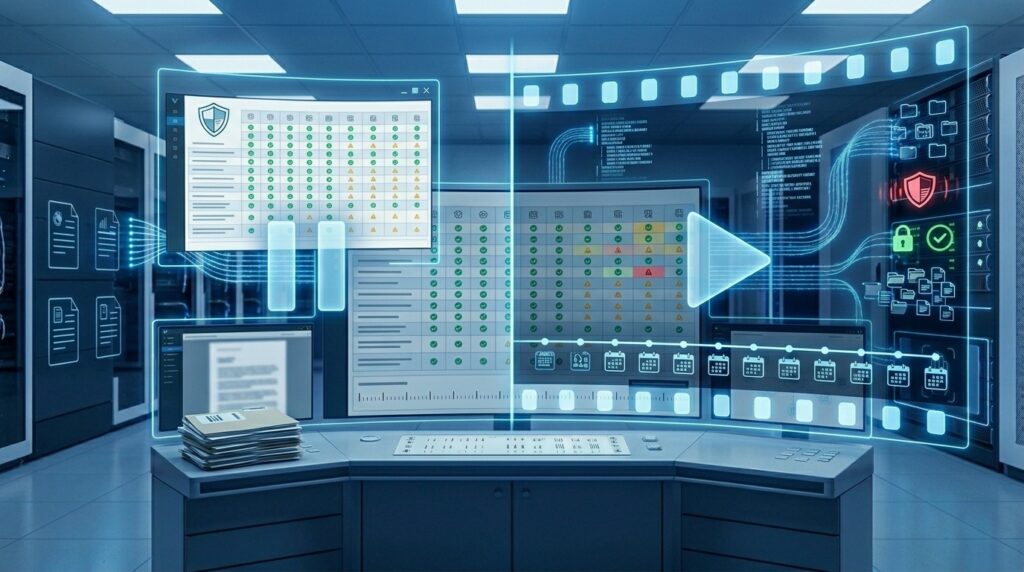
A Type 1 report is a snapshot. The auditor confirms your controls are designed correctly on a single date. A Type 2 report is a motion picture. The auditor reviews evidence across the entire observation window and tests whether those controls were followed consistently, not just documented.
That distinction changes everything about preparation. You cannot write a policy the week before the audit starts and expect it to satisfy a Type 2 reviewer. The policy needs to exist, the team needs to follow it, and you need evidence proving that for months, not days.
Total investment for a first-time SOC 2 Type 2 typically lands between twenty thousand and one hundred fifty thousand dollars once you account for the audit fee, readiness work, tooling, and internal staff time. The audit fee itself is usually only thirty to forty percent of that total. The rest is the part most teams underestimate.
Phase 1: Scoping and Trust Service Criteria Selection
Security is the only mandatory Trust Service Criterion as defined by the AICPA Trust Services Criteria. Everything else, Availability, Confidentiality, Processing Integrity, and Privacy, is optional and should only be in scope if your customers contractually require it.
Adding criteria you do not need is the single most common way teams inflate their own audit cost and timeline. Every additional criterion means more evidence categories, more control testing, and more auditor hours billed to your account.
Before you scope the audit, pull your last three enterprise contracts and check what your customers actually ask for in security questionnaires. This aligns your audit effort with your broader cybersecurity risk management strategy.
Phase 2: Policy and Control Documentation
This is the paperwork phase, and it is where most teams discover how much is undocumented even when the underlying practice is sound. You need written policies covering access control, change management, incident response, vendor risk management, and data classification at minimum.
Having a policy is not the same as having a control. A policy states what should happen. A control is the mechanism that makes it happen and the evidence trail proving it did. If your access control policy says terminated employees lose access within 24 hours, your control is the actual offboarding workflow and the logs showing it executed on time, every time.
Phase 3: Evidence Collection Setup

Manual evidence collection is where SOC 2 budgets quietly balloon. Screenshotting access logs every month for an observation period that runs six to twelve months is not a process, it is a liability waiting to surface during fieldwork when someone forgot September.
Most organisations now use a compliance automation platform to handle continuous evidence collection rather than relying on manual exports. The tool does not replace the work of building real controls, but it does remove the risk of gaps in your evidence trail that an auditor will flag immediately.
Set this up before your observation period starts, not during it. Evidence collected retroactively, or evidence with visible gaps, is one of the fastest ways to turn a clean Type 2 engagement into a qualified opinion.
Phase 4: The Observation Period
This is the phase teams underestimate most. Once your observation period begins, your controls need to run exactly as documented for the full duration, typically three to twelve months depending on your auditor and your customers’ requirements.
Any control failure during this window does not disqualify you automatically, but it does need to be documented along with your remediation. Auditors expect imperfection. What they are testing for is whether you catch and fix issues consistently, not whether you achieve a flawless record, a core principle of cyber resilience.
Run an internal mid-period check at roughly the halfway mark. If evidence gaps or control failures show up there, you still have time to remediate before the auditor’s fieldwork begins. Finding them during fieldwork itself means a longer engagement and a higher invoice.
Phase 5: Auditor Fieldwork and Report Delivery
By the time fieldwork begins, the heavy lifting should already be done. The auditor’s job at this stage is to sample your evidence, interview control owners, and verify that what you documented matches what actually happened.
Choose your auditor deliberately. A specialist CPA firm with SOC 2 experience in your industry typically satisfies enterprise procurement reviews at materially lower cost than Big Four letterhead. Reserve a Big Four engagement for situations where a specific enterprise customer’s procurement team explicitly requires it.
According to research from Gartner Digital Markets, 46 percent of software buyers prioritise security certifications and data privacy practices when evaluating vendors, which is exactly why this investment pays for itself in shortened sales cycles even before you factor in the security improvements themselves.
Audit Readiness Self-Assessment
Before you engage an auditor, score yourself honestly against the controls below. A gap discovered during your own review costs nothing to fix. The same gap discovered during fieldwork costs auditor hours, and possibly a re-test.
A Cost and Timeline Reference
Use this table as a starting benchmark. Actual figures depend heavily on company size, the number of Trust Service Criteria in scope, and your starting security maturity.
| Component | Typical Range | Notes |
| Readiness Assessment | $5,000 to $15,000 | Identifies gaps before engaging an auditor |
| Auditor Fee (Security only) | $15,000 to $30,000 | Mid-tier specialist firm, single criterion |
| Compliance Automation Tooling | $5,000 to $20,000/year | Continuous evidence collection |
| Internal Staff Time | 100 to 200 hours | Spread across IT, HR, Legal, Engineering |
| Observation Period | 3 to 12 months | Non-negotiable, drives total timeline |
Annual renewals cost meaningfully less than the first-time audit, typically dropping thirty to fifty percent once your policies, tooling, and evidence collection processes are already in place. The first year builds the foundation. Every year after that, you are maintaining it.
Getting Audit-Ready Without the Last-Minute Scramble
The teams who pass a SOC 2 Type 2 audit on the first attempt are the ones who treat readiness as a project with a defined start date, not a fire drill triggered by a customer’s procurement deadline.
That means scoping correctly, documenting controls before the observation period starts, setting up evidence collection in advance, and running an honest internal check at the midpoint. None of it is complicated. All of it requires starting earlier than most teams instinctively do.
If you are heading toward your first SOC 2 Type 2 audit or preparing for a renewal and want a clear view of where your gaps actually are, the Zaplio team works with mid-market IT and compliance leaders through exactly this process. Download the SOC 2 Preparation Checklist and get a structured starting point before you engage an auditor.